Common Industrial AC Problems and How Professional Technicians Fix Them
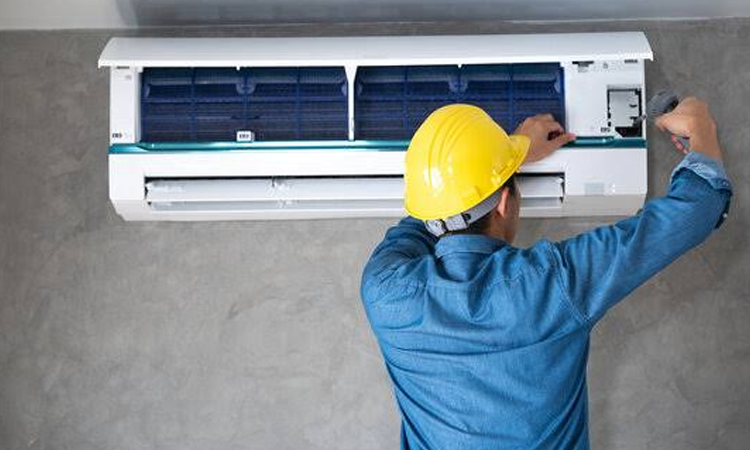
Common Industrial AC Problems and How Professional Technicians Fix Them
Industrial air conditioning systems play an important role in maintaining comfortable temperatures and suitable working conditions in factories, manufacturing units, warehouses, production facilities, and commercial buildings. Unlike residential air conditioners, industrial AC systems are designed to handle larger spaces, higher cooling loads, and continuous operating requirements.
When an industrial AC system develops a fault, it can affect workplace comfort, equipment performance, production activities, and overall business operations. Problems such as poor cooling, refrigerant leakage, compressor failure, electrical faults, and blocked filters can reduce system efficiency and lead to unexpected downtime.
Understanding common industrial AC problems and how professional technicians fix them can help businesses identify issues early and arrange timely repairs. In this blog, we explore the most common industrial air conditioning problems, their possible causes, and the professional repair solutions used to restore cooling performance.
Poor Cooling or Insufficient Airflow
One of the most common problems in industrial air conditioning systems is inadequate cooling. The system may be running continuously but still fail to maintain the required temperature.
Possible causes:
- Dirty or clogged air filters.
- Blocked air ducts or vents.
- Low refrigerant levels.
- Dirty evaporator or condenser coils.
- Incorrect thermostat settings.
- Improper system sizing or excessive cooling load.
How professional technicians fix it:
Technicians inspect the complete cooling system to identify the reason for insufficient cooling. They check filters, coils, airflow, refrigerant pressure, thermostat settings, and ductwork.
Depending on the findings, they may clean or replace filters, remove coil deposits, clear airflow obstructions, repair refrigerant leaks, or recommend adjustments to the cooling system.
Refrigerant Leakage
Refrigerant is essential for transferring heat and maintaining the cooling cycle. A refrigerant leak can reduce cooling capacity and place additional strain on the compressor.
Common signs of refrigerant leakage:
- Reduced cooling performance.
- Longer operating cycles.
- Ice formation on certain components.
- Unusual hissing sounds near refrigerant lines.
- Repeated need for refrigerant top-ups.
How professional technicians fix it:
A qualified technician checks the refrigerant circuit using suitable leak-detection methods. Once the leak is located, the damaged connection, pipe, or component is repaired or replaced.
The technician then performs the required pressure and leak checks before charging the system with the correct refrigerant type and quantity according to the manufacturer's specifications.
Simply adding more refrigerant without fixing the leak is not a permanent solution.
Industrial AC Compressor Problems
The compressor is a major component of an air conditioning system. It circulates refrigerant through the cooling circuit and helps maintain the required pressure conditions. Compressor problems can affect the entire cooling process.
Possible causes:
- Electrical supply fluctuations.
- Overheating.
- Low or incorrect refrigerant charge.
- Poor lubrication or oil-related issues.
- Blocked condenser coils.
- Worn or damaged internal components.
How professional technicians fix it:
Technicians inspect compressor operation, electrical connections, operating pressures, temperature readings, and relevant safety controls. They also examine the condenser and refrigerant circuit to identify conditions that may be causing compressor stress.
Depending on the fault, the solution may involve repairing electrical components, correcting airflow problems, addressing refrigerant issues, or replacing the compressor when necessary.
Unusual Noise and Vibrations
Industrial AC systems may produce unusual sounds when mechanical or electrical components develop faults. Excessive vibration can also indicate loose mounting arrangements or damaged parts.
Common causes:
- Loose fan blades or mounting brackets.
- Worn bearings.
- Damaged motors.
- Misaligned rotating components.
- Loose panels or duct connections.
- Compressor-related mechanical issues.
How professional technicians fix it:
Technicians identify the source of the noise by inspecting fans, motors, bearings, mounting arrangements, and compressor operation.
They tighten loose connections, replace damaged components, correct alignment issues, and check whether the equipment is operating within its recommended limits.
Early diagnosis helps prevent minor mechanical problems from developing into more serious equipment failures.
Conclusion
Industrial air conditioning systems are essential for maintaining suitable working conditions in factories, warehouses, manufacturing units, and commercial facilities. Problems such as poor cooling, refrigerant leakage, compressor failure, electrical faults, water leakage, and unusual noise can affect system performance and interrupt daily operations.